
Para-hôtellerie (letting with hotel-style services, which changes the VAT treatment) has been much discussed since the “Le Meur” law tightened the tax rules on classic furnished letting. Many owners are asking whether switching to this regime would change things for them. The answer comes down to a single sentence: it depends almost entirely on your own circumstances, not on any general rule. This guide sets out how the mechanism works, how reclaimable VAT works and where it stops, and three worked examples to help you think through your own case.
For a quick side-by-side view of the two regimes, see our comparison of para-hôtellerie and classic furnished letting. This guide goes further into how VAT works and adds worked examples.
Table of Contents
1. What Exactly Is Para-Hôtellerie?
Para-hôtellerie is a VAT regime, not a separate legal status. It applies as soon as your short-term furnished letting (30 nights maximum per stay) comes with at least 3 of the 4 services set out in article 261 D 4°-b of the Code général des impôts, the French tax code. Your activity is then treated, for tax purposes, in the same way as conventional hotel accommodation.
Breakfast: must be offered to every guest — on site or delivered — and not simply as a paid extra available to a few.
Regular cleaning during the stay: the clean has to take place during the stay, not only on arrival and departure. A weekly clean on a two-week stay meets the condition; a clean only at the start and the end does not.
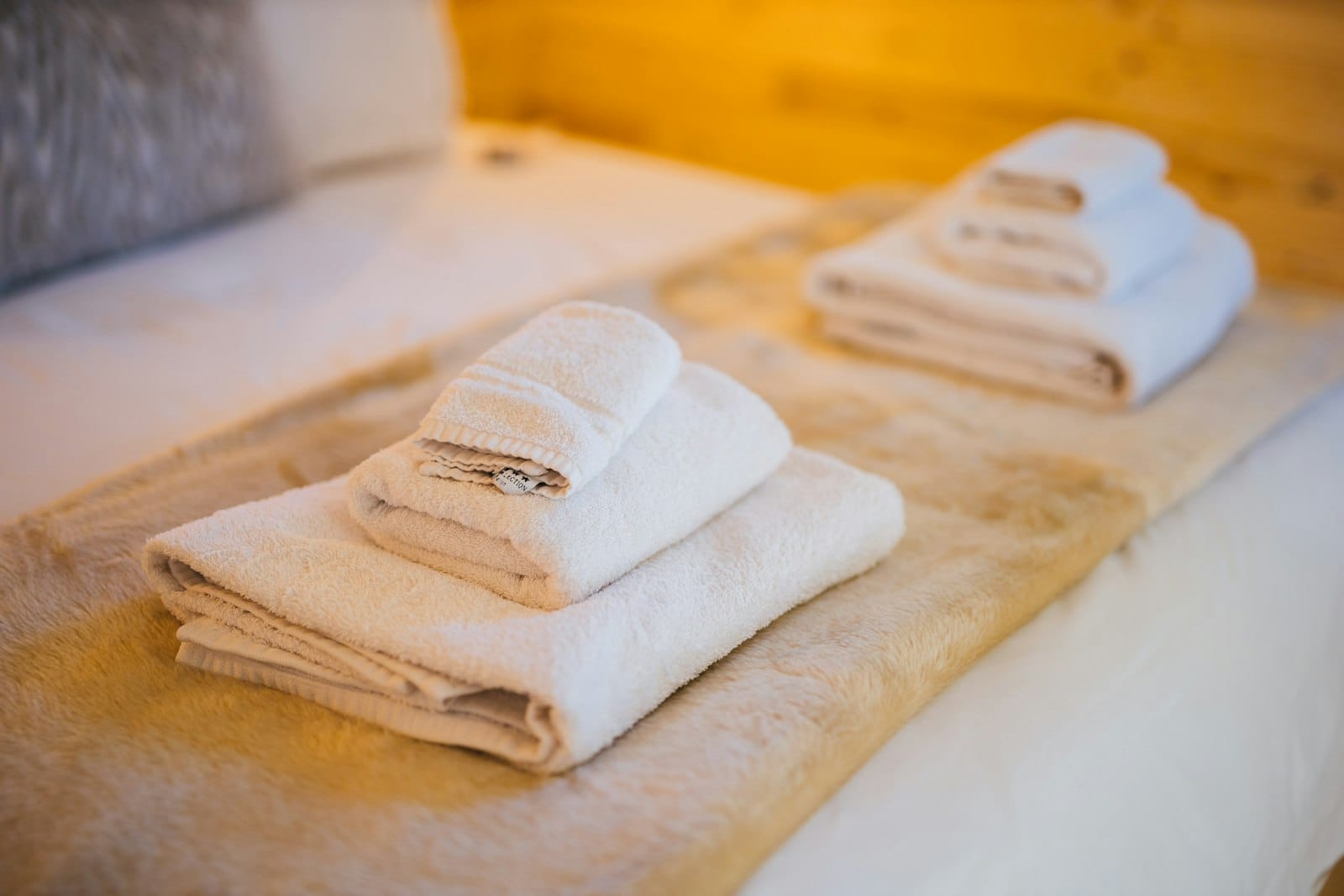
Household linen provided: sheets, towels and bathroom linen must be supplied to every guest. Simply offering them to hire as an option does not meet the condition.
Reception of guests: some form of welcome is required, even an impersonal one: a welcome in person, a key box together with an arrival guide, or a dedicated telephone line may be enough under BOFiP guidance.
In short: 3 of the 4 conditions are enough — you do not have to offer all four services to move into para-hôtellerie.
2. How VAT Works Under Para-Hôtellerie
Once the regime applies, your rental income becomes subject to VAT at 10% (the reduced rate for accommodation). A franchise en base — a small-turnover VAT exemption — may apply if your receipts stay below certain thresholds; check the figure currently in force on impots.gouv.fr, as it is reviewed regularly.
In practical terms: you have to declare and pay over the VAT you collect (the CA3 return, monthly or quarterly depending on your regime), and the price shown to guests stays VAT-inclusive — the VAT is absorbed into the rate rather than added on as a visible extra.
In return, you reclaim the VAT you pay on expenses linked to the activity: building work, furniture, equipment, professional fees. That benefit is what makes the regime attractive — provided you understand where it stops.
3. Reclaiming VAT: The Key Benefit (and Its Limits)
This is the real economic engine of para-hôtellerie: if you have just bought or heavily renovated, the VAT paid on the works, the furniture and the equipment can be reclaimed from the French Treasury — an immediate gain that does not exist under classic furnished letting.
But that reclaim is only definitively yours at the end of an adjustment period: 20 years for a building (article 207 of annexe II to the CGI), and shorter for furniture and equipment. If you leave the VAT regime before that point — by going back to classic furnished letting, for example — you will have to repay a share of the VAT you reclaimed, pro rata to the years remaining (in twentieths for a building).
Worth watching: para-hôtellerie is not a one-off choice. A genuine commitment to running the property over several years is needed for the VAT reclaim to stick — and that is the factor that should weigh most heavily in your decision if significant works are involved.
4. Three Worked Examples (Illustrative)
The examples below are hypothetical cases, built from the tax rules currently in force to illustrate a way of thinking. The figures are rounded and are no substitute for a costing done for you by your accountant.
Profile A — The occasional chalet. One-bedroom flat in Chamonix, furnished and unrated. Let 8 weeks a year (school holidays plus summer), annual receipts: €16,000. Under the classic regime: micro-BIC allowance of 30% → taxable base €11,200, no VAT, very simple to run. Under para-hôtellerie: VAT at 10% on receipts, so roughly €1,600 to collect and pay over, plus commercial accounting obligations — for a property with no recent works to set against reclaimable VAT. Illustrative verdict: classic furnished letting stays clearly simpler here, with no loss of return on this profile.
Profile B — The rated flat, heavily booked. Two-bedroom flat in Megève, rated 4-star meublé de tourisme (the French official star rating for holiday lets). Let almost all year, annual receipts: €48,000. Under the classic regime (rated): micro-BIC allowance of 50% up to €77,700 → taxable base €24,000, so a very light tax bill. Under para-hôtellerie: VAT at 10% on €48,000, about €4,800 a year to manage, with no meaningful reclaim to set against it in the absence of recent works. Illustrative verdict: the rating combined with the 50% micro-BIC allowance wins, as long as there is no major investment to set against VAT.
Profile C — The major renovation. Older chalet bought for €420,000, full renovation works: €90,000 including VAT. The plan is to let intensively summer and winter, with services properly organised and target receipts of €65,000 a year. Under para-hôtellerie: reclaimable VAT on the works of roughly €15,000 refunded by the French Treasury, against VAT collected on rental income of 10% × €65,000, about €6,500 a year. The condition: staying in para-hôtellerie for the long term, so as not to trigger a partial repayment of the VAT reclaimed on the building (adjustment over 20 years). Illustrative verdict: this is the profile where para-hôtellerie genuinely changes the equation — provided there is a real commitment to running it behind the decision.
5. Day-to-Day Operating Obligations
What the tax authorities look at is not a stated intention but an operational reality: the 3 services have to be genuinely delivered to every guest, on every stay — not now and then.
In practice that calls for an organisation able to handle cleaning during the stay (not just on arrival and departure), the turnaround of linen, the preparation or delivery of breakfasts, and a welcome or assistance service available continuously.
That is exactly the operational base Care Concierge already runs day to day for its owners — hotel-quality linen, cleaning and guest welcome — which makes setting up a para-hôtellerie operation more straightforward for those who choose that route.
6. Status, Accounting and Formalities
Para-hôtellerie counts as a commercial activity, unlike classic furnished letting, which for most owners remains the management of an asset under LMNP status (loueur en meublé non professionnel, the non-professional furnished landlord regime). That commercial classification brings heavier obligations: registration, commercial accounts (balance sheet and tax return package) and potentially different social security obligations depending on the level of receipts.
The régime réel — taxation on actual income and expenses rather than a flat-rate allowance — becomes the norm as soon as the activity is properly structured: micro-BIC, designed for the simplicity of classic furnished letting, generally does not suit a para-hôtellerie operation. These points should always be checked with an accountant before any change of regime.
FAQ – Para-Hôtellerie
A change of VAT regime takes effect from the date you declare it, with no retrospective effect on the period already gone. The best timing is usually the start of an accounting year — worth confirming with your accountant, so you avoid straddling two regimes in the same year.
No. In practice the price displayed stays VAT-inclusive: the VAT is built into the rate and paid over by the owner, rather than added on as a visible extra for the guest at the point of booking.
The VAT regime no longer applies for the period concerned, with a risk of reassessment if the tax authorities find a structural — rather than occasional — failure to provide the services. Hence the importance of documenting how the property is actually run (cleaning schedules, proof of linen supplied, and so on).
The two ideas do not map onto each other exactly: para-hôtellerie classifies your activity for VAT purposes, while LMNP and LMP (non-professional and professional furnished landlord status) concern how your income is taxed (as BIC, commercial profits) and the social security thresholds. The two can coexist, but a commercial activity generally makes the régime réel more appropriate than micro-BIC.
Yes, in principle, as with any commercial furnished letting activity — and it is already the case in most LMNP situations. The CFE (the local business tax) is not an extra cost specific to para-hôtellerie, but it is something to plan for in your budget.
Sources and Further Reading
This article was written from official sources consulted in August 2026. Regulated rates and thresholds are revised every year, so we recommend checking the exact figures before making any decision.
BOFiP · impots.gouv.fr — VAT: hotel and para-hotel accommodation and furnished lettings
BOFiP · impots.gouv.fr — VAT: adjustments to deduction entitlements
impots.gouv.fr — Furnished lettings: regimes and returns
economie.gouv.fr — Furnished holiday letting: the rules to follow
To compare the two regimes side by side, see our comparison of para-hôtellerie and classic furnished letting.
Next step
Price up your property before choosing a regime
Before deciding between para-hôtellerie and classic furnished letting, it helps to know what your property actually generates. Our estimator gives you an annual range in two minutes, already net of our 19 % commission and platform fees.
- 2 minutes
- No sign-up
- Mont-Blanc valley
Estimate based on classic furnished rental. We’re happy to answer questions at +33 7 66 79 73 64
A personalised comparison
Which regime is right for your property?
This page covers the general rules. Your own answer depends on your property, your building works, your other income and the way you run the letting. Tell us where you stand and we’ll come back to you within 24 business hours with a costed comparison for your situation. Free, no obligation.
Thank you.
Your request has come through. A member of the team will call you back within 24 business hours to compare the two regimes against the real figures for your property and answer your questions.
Urgent question? Call us at +33 7 66 79 73 64.
We’re not lawyers or accountants. We give you the real figures from running your property — income, occupancy, costs — and, if your situation calls for it, put you in touch with professionals in the valley who know holiday letting.
Let’s Talk About Your Project
We manage more than 250 properties in the valley, both classic furnished lettings and para-hôtellerie operations. Have questions, or want to look at your own situation? Our team is happy to help.
Share the article:
To go further: our turnkey Airbnb property management, and our pages commune by commune — Chamonix · Megève · Saint-Gervais-les-Bains · Sallanches.

